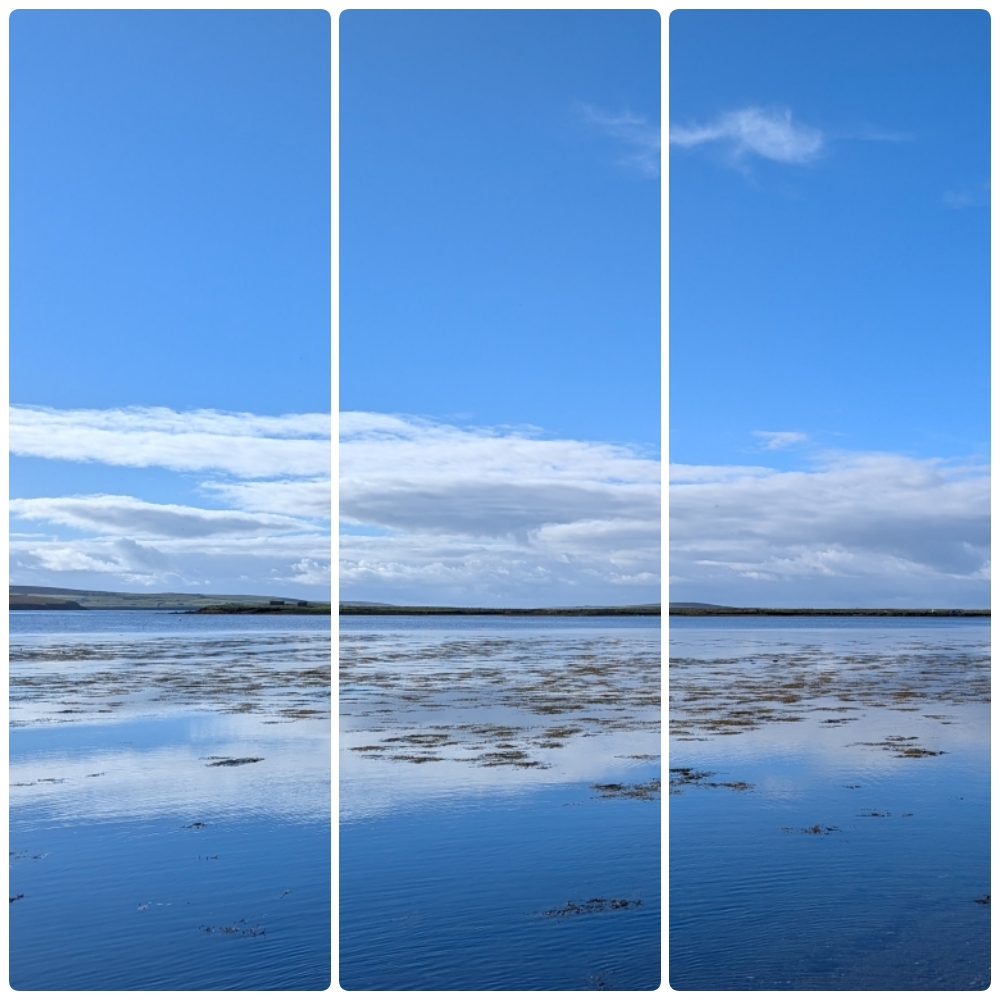
Scotland trip Part 2: fascinating light on untamed Orkney
Part 1 of the road trip saw us spend a really enjoyable five days in Fort William. But the main event for us was yet to come and the new experience of our trip to Orkney was in our minds. We didn’t take the most direct route and headed west to travel past Eilean Donan castle, on the Kyle of Lochalsh. The castle is a magnificent sight and a place we have been to before.
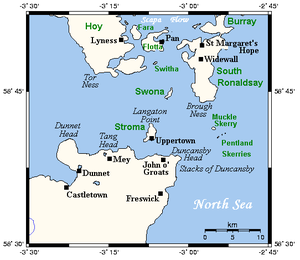 For the ‘second part’ of our trip we headed for a couple of nights in Thurso before taking the ferry across the Pentland Firth to St Margarets Hope in Orkney.
The Pentland Firth is a dangerous and fast flowing strait that separates the Orkney Islands from the mainland of Scotland. The strait links the Atlantic Ocean with the North Sea to the east. I gather it has some pretty extreme tides with some of the fastest tidal currents in the world.
The waters there can sometimes be rough with the fierce tides meeting gale force winds and have cause a fair share of shipwrecks. Crossings in the October to Match period are often subject to cancellations or timetable shifts!
Thurso, Scrabster and Dunnets Head – a stop before Orkney
Staying just outside Thurso in Scrabster was more for practical reasons than anything else. We wanted a stop over after the drive from Fort William and before we headed to Orkney. Due to timing we stayed there for two nights.
Thurso is the most northerly town on mainland Scotland and as far as I understand is probably a decent base if you want to explore the environment and history of Caithness. Apparently it’s regarded as one the UK’s top locations for water sports. The town is even home to a world surfing championship.
We made a visit to the lighthouse and cliffs of Dunnet Head, which is actually the most northerly point on the British mainland even further north than perhaps the more well known John o’Groats which is 14 miles away to the east.
In all honesty I can’t say we saw a great deal of Thurso. It really was more or less just a place to stay before the ferry rather than a destination we had really wanted to go to.
Picture set 1 – Scrabster, Thurso and Dunnet head
Click any image below to open the picture set to scroll/click through


Across the Pentland Firth and beyond
Leaving Scrabster behind, we made the short (25 minute) drive to Gills Bay for the Pentland Ferries crossing to St Margarets Hope in Orkney. The crossing was pretty smooth and the weather was glorious.
Once off the ferry at St Margaret’s Hope (which was where we staying), we towards Burray along the quiet roads of South Ronaldsay. Just outside the village we stopped to look at the Covid Whale Arch – a bone structure made from the jawbones of two fin whales that were stranded during the Covid pandemic years.
From there, we followed the road across the Churchill Barriers, which are the massive concrete causeways built during World War II to seal off Scapa Flow. It’s pretty interesting as you cross the causeway to see the rusting ships that still lie in the water.
Click any image below to open the picture set to scroll/click through


The Italian Chapel
Next up was a visit to the Italian Chapel. This was built by Italian prisoners of war out of Nissen huts and scrap materials during the second world war. The interior is very intricate and detailed and is really quite remarkable. You can read more about this fascinating place at this link.
Click any image below to open the picture set to scroll/click through


Sunlight and seals
A short drive brought us to the Loch of Ayre for a leg-stretch. One of the things that was really noticeable and I suppose quite striking was the quality of the light. The sun stays low at this time of year and barely climbs above the horizon all afternoon, which in turn means that at times there was a continuous golden, glow across the landscape. The reflections off the water of the loch and the sea were fantastic.
The bay there is also home to a seal colony and there were quite a few for us to see, either basking in the sun or bobbing about in the shallow water.
Click any image below to open the picture set to scroll/click through


Extraordinary history
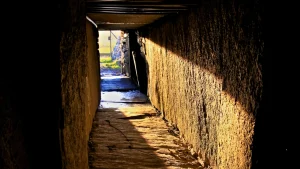 On our second day on Orkney we headed for Maeshowe to check out one of the best examples of Neolithic life on Orkney.
We had booked tickets in advance so knew we wouldn’t be turned away. You can only visit in a small group and via a guided tour. When you approach the massive green mound from the road, it looks simple enough from the outside and provides no clues to what you are about to see.
But once you get in – bu stooping down to walk through a 30 foot tunnel the central chamber is just remarkable. 5,000-year-old stonework, alongside centuries-old Viking runic graffiti carved right up into the walls. The place is older than the great pyramids of Egypt! Have a look at the information on the Historic Environment Scotland website
To be honest, at the same time as accepting the next action to be quite juvenile we felt that the road trip would not have been complete without a brief photo stop at the famous Twatt road sign—a humorous nod to Orkney’s direct Old Norse naming conventions that we just had to capture.
After Maeshowe (and that road sign), we headed west to the coast at Skara Brae. Skara Brae was first uncovered by a storm in 1850, and has since gone on to become an incredibly important 5,000 year old Neolithic site.
A replica Neolithic house has been built nearby to show how a full interior might have looked.
After viewing the replica house a walk along a grassy path takes you to a location that overlooks the ancient buildings that were partially revealed by the storm before they were excavated. I would say it’s well worth a visit.
Skaill House is absolutely worth a visit (at the same time as Skara Brae) – it’s a 17th century mansion just across from the Neolithic site and entry is via the same ticket to the ancient site.
Click any image below to open the picture set to scroll/click through


A quick detour and the great stone circles in Orkney
Having done the Neolithic thing we pretty much finished the day by heading for the narrow strip of land that separated the Loch of Harray and the Loch of Stenness. Once there we made fairly brief visits to the two stone monuments at that location.
They were The Stones of Stenness and The Ring of Brodgar. The first are enormous, razor-sharp vertical stones and are some of the oldest henge stones in Britain. The second (Brodgar) are a huge sweeping circle of stones standing on the open moorland. Check the links above to read more about them.
Click any image below to open the picture set to scroll/click through


A bracing walk and a visit to Kirkwall
We had a very bracing walk around the Loch of Ayre before making a trip to Kirkwall more or less the last place we called to on Orkney.
Although it’s the administrative centre of Orkney it’s population at the 2011 census was less than 10,000. In fact the overall population of Orkney was estimated to be around 22,000 in 2025, with around 20 of the 70 or so islands that make up the Orkney populated
We wandered down the narrow streets and a decent collection of artisan type shops, had an Orkney ice cream and then finished with a look around the red sandstone building of St Magnus Cathedral, before heading back to our accommodation for our last evening on Orkney.
One thing to be aware of when visiting Orkney
Each year there are typically between 170 and 220 cruise ships that call at Orkney which in turn bring between 170,000 and 215,000 passengers. In 2026 there were 234 bookings (from the very large ships with up to 4,000 people on board to smaller ships with just a dozen or so passengers. These bookings and berth allocations are scheduled through the Orkney Islands Council Harbour Authority.
Harbour authority uses the booking policy to mitigate impacts on the land and infrastructure. If you do decide to head to Orkney it would be worth checking online when large cruise ships are in and what their pre-booked schedules are (it’s easy enough to do online). You would probably want to avoid visiting places like Skara Brae if it was a day when it was on the itinerary of a cruise ship tour.
Click any image below to open the picture set to scroll/click through


